
Sex Offender Checks in Okeechobee County
FDLE operates the Florida Sexual Offender and Predator Registry. It is the main public search for Okeechobee County. The Sheriff's Office performs local registration, verification, and transmission to FDLE. No separate county registry database was confirmed.
Use a name when checking a known person. Use Okeechobee County, city, or ZIP for local awareness. Partial names are accepted. Results can include offenders, court-designated predators, or both. Always open the profile and check current status.
OCSO Offender Registration
Okeechobee County residents subject to registration report through the Sheriff's Office at 504 NW 4th Street, Okeechobee, Florida 34972, (863) 763-3117. Verify the current unit schedule before visiting.
Initial registration generally occurs within 48 hours of residence or the triggering release or event. The sheriff photographs the registrant, takes fingerprints and palm prints, collects required data, and sends it to FDLE. Jail custodians also register qualifying people taken into custody.
How to Search the Florida Registry
Open the FDLE registry. At least one name or geography field is required. Blank names with Okeechobee County selected produce a place-based result.
- Open the FDLE registry and review its conditions.
- Enter a partial or full name, or select Okeechobee County, city, or ZIP.
- Choose offender, predator, or both and narrow status if useful.
- Open the profile, compare aliases and physical details, and read the status.
| Field Label | Type | Required | Notes |
|---|---|---|---|
| Last Name | Text | No | Partial names or geographic search supported. |
| First Name | Text | No | Partial names or geographic search supported. |
| City or ZIP | Text | No | Partial names or geographic search supported. |
| Okeechobee | Dropdown | No | Partial names or geographic search supported. |
| Neighborhood Search | Not confirmed | No | Partial names or geographic search supported. |
Okeechobee and National Registry Searches
The National Sex Offender Public Website adds a cross-state layer when a person may have moved beyond Florida.
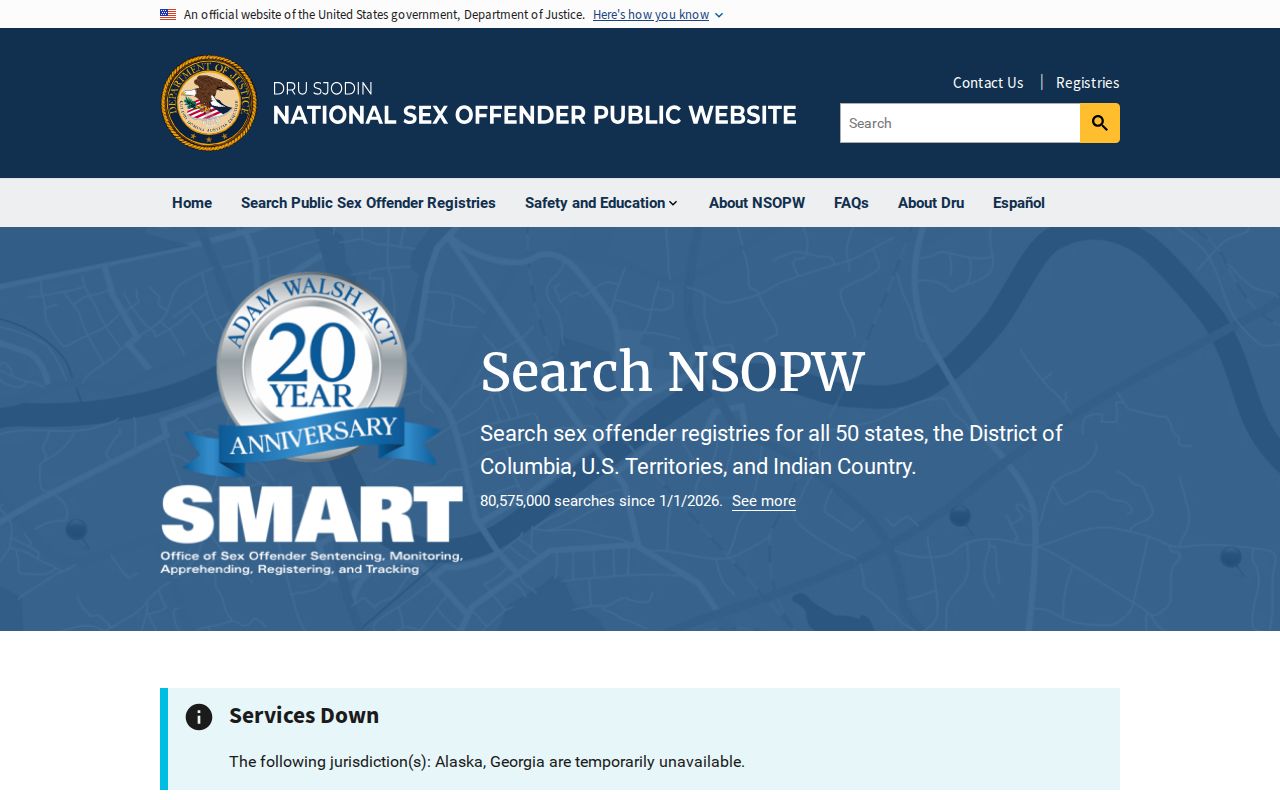
NSOPW does not replace OCSO for local reports or FDLE for Florida profile detail.
Inside an Okeechobee Registry Profile
A profile can connect aliases, a photograph, physical traits, address information, qualifying offenses, and status. Agencies collect some added information that may not appear on the public profile.
| Name & Aliases | Public profile field described by FDLE. |
|---|---|
| Photo & Physical Description | Public profile field described by FDLE. |
| Registered Address | Public profile field described by FDLE. |
| Offense & Statute | Public profile field described by FDLE. |
| Level / Tier | Public profile field described by FDLE. |
| Registration Status | Public legal status and available verification details. |
Okeechobee Predator Notification
Florida requires community notice for sexual predators. The sheriff or police chief chooses the method. Licensed daycare centers and schools within one mile receive notice under section 775.21.
Notice may state the name, photograph or description, address, offense facts, and whether the victim was a minor or adult. It never includes the victim's name. FDLE also offers Offender Alerts and neighborhood searches.
Florida Registration Levels and Requirements
Florida does not use a simple public Tier I, II, and III display. Its core labels are sexual offender and court-designated sexual predator. Both commonly involve lifetime registration, but frequency and narrow petition rules differ.
| Level / Tier | Duration | Verification Frequency |
|---|---|---|
| Sexual offender | Generally life, subject to narrow statutory relief | Every six months for offenders; every three months for predators or specified offenders |
| Sexual predator | Generally life, subject to narrow statutory relief | Every six months for offenders; every three months for predators or specified offenders |
Okeechobee Registration Duties
Section 775.21 governs predators and notification.
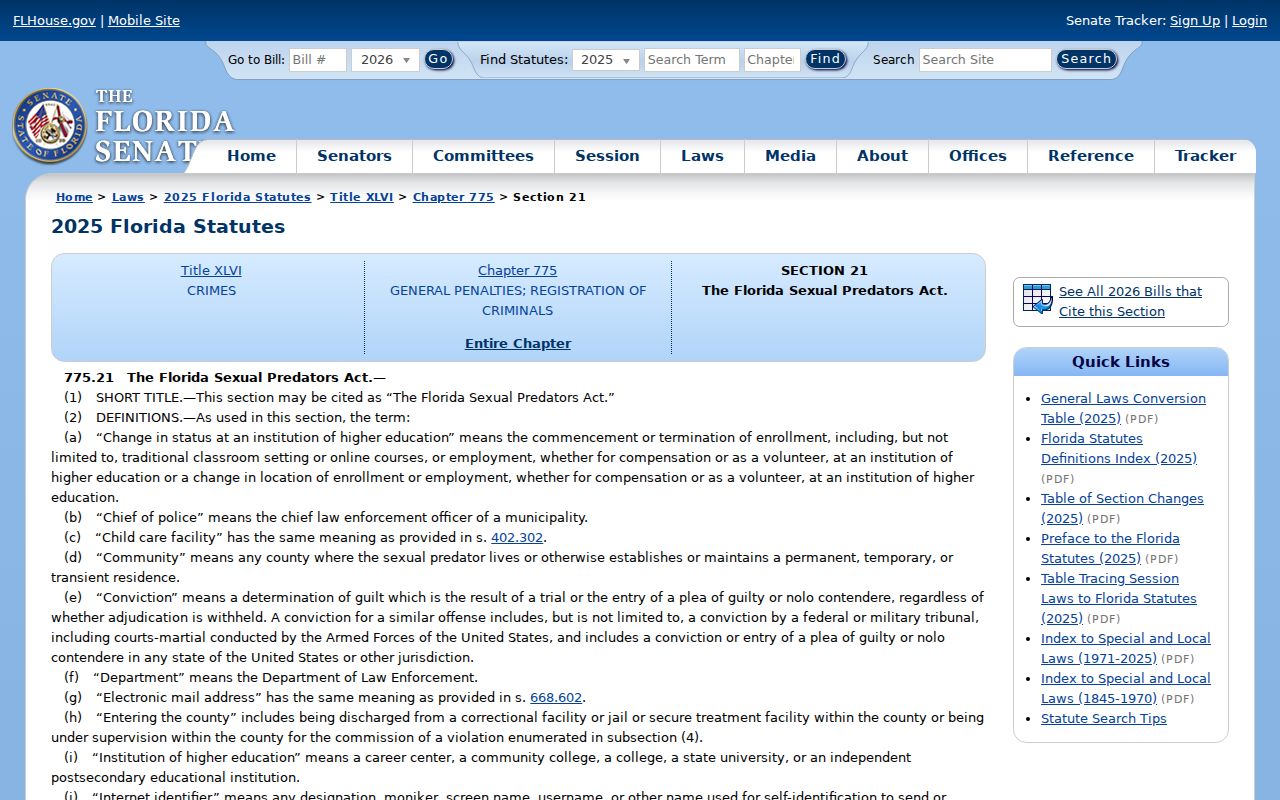
Section 943.0435 governs offender duties.
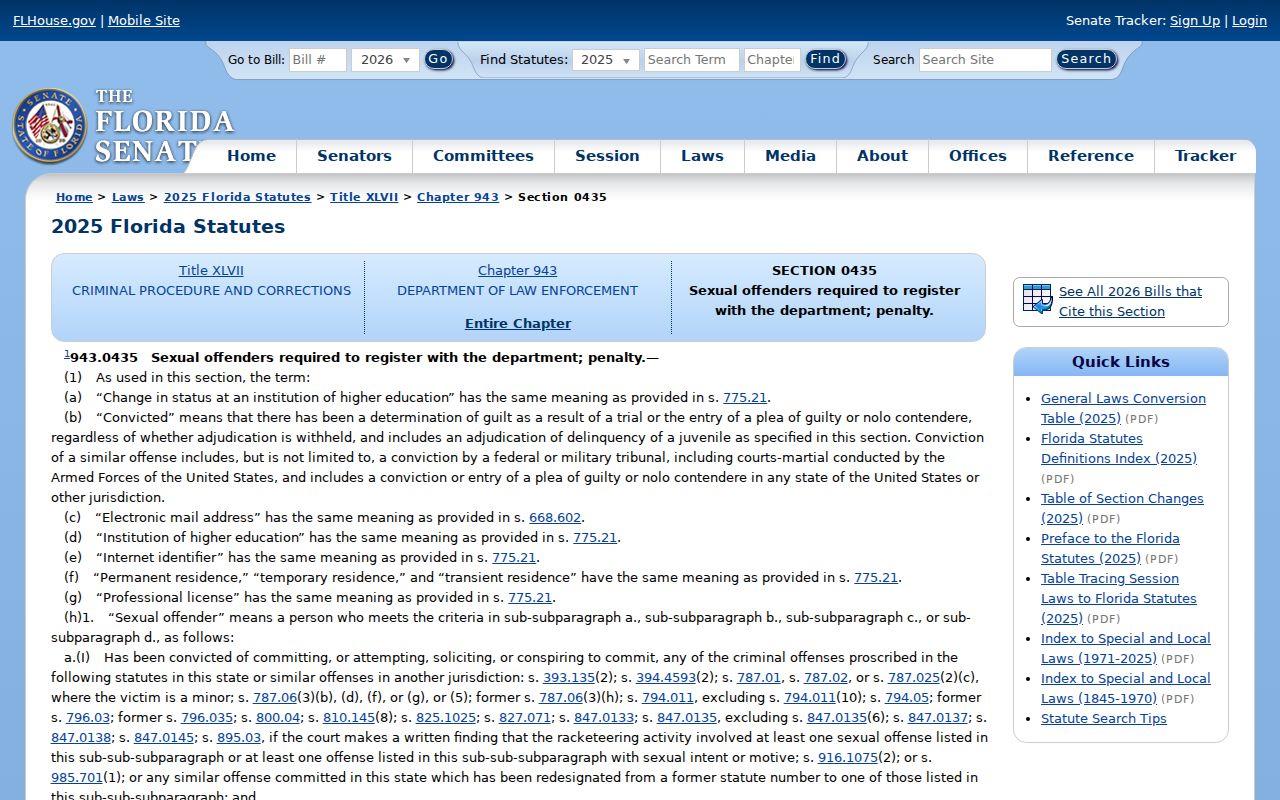
Short deadlines apply to changes in residence, name, vehicle, phone, work, and internet identifiers.
Okeechobee Registry Status Filters
The FDLE status control can separate absconded, civil commitment, confinement, deceased, deported, released subject to registration, and several kinds of supervision. Supervision options include the Florida Department of Corrections, Florida Department of Juvenile Justice, and United States Probation. A second control covers in-state persons, out-of-state persons, or both. These filters help narrow a result but do not change the legal meaning of the profile.
An absconded label calls for notice to law enforcement, not direct action. A confinement label may place the person outside an ordinary residential setting. A supervision label identifies the agency category shown by FDLE, not every condition of supervision. Read the offense, designation, residence data, and current status together.
Confirming an Okeechobee Registry Match
Compare the full name, aliases, photograph, date of birth or age, physical description, scars or tattoos, residence geography, and qualifying offense. Vehicles and registration details may also help distinguish similar names. FDLE warns that fingerprints are required for positive identification. A photograph or shared name alone is not enough.
The public profile may show legal status, offense jurisdiction and dates, and a victim-age category where authorized. Agencies also collect fingerprints, palm prints, employment, higher education, phone, email, and internet identifiers. Do not assume each collected item is visible to ordinary public users. The registry is a defined public view, not the Sheriff's whole registration file.
Report Okeechobee Registry Concerns
When a profile appears inconsistent with an observed address or status, save the FDLE profile link and note the specific fact, date, and location. Contact OCSO at (863) 763-3117. Do not confront the person, post accusations, or try to investigate private property. Law enforcement can compare the report with registration data that the public cannot see.
Failure to register is generally a third-degree felony, but only the responsible agency and court can determine whether a violation occurred. Travel, confinement, a recent move, reporting deadlines, and system updates may affect what the public screen shows. A focused report gives OCSO a better basis for verification than rumor or a screenshot without context.
Selected FDLE results can print to PDF, with a limit of 25 records at once. FDLE also provides public CSV data for a county or the state. A saved result is a point-in-time copy, so return to the live Okeechobee County profile before relying on status or location. The registry can change as agencies receive new residence, custody, court, or supervision information.
Neighborhood, campus, internet-identifier, and alert functions answer different questions. Use the county filter for a broad local list, a name for a known person, and alerts for notice about a chosen area. No one search mode proves that a person outside its results has no registration duty in another state.
Community Notification and Lawful Use
Registry information supports personal safety and community awareness. It is not permission to harass, threaten, or take enforcement action. Send suspected noncompliance to OCSO or FDLE with the profile and specific observed facts.
Florida law also prohibits using registry data to secure payment, knowingly publishing false information as public record data, or materially altering it to misrepresent the record. A stale saved profile should not be reposted as if it were current. Confirm the live FDLE entry and let law enforcement handle compliance.
Community notification can include the predator's name, photograph, description, address, and offense facts allowed by law. It protects the victim's identity. Readers should preserve that boundary when sharing an official notice for safety purposes.
Florida's offender and predator labels should not be converted into an invented risk tier. The designation comes from law and the court record. Registration frequency also depends on the applicable category. Predators generally report in the birthday month and every third month, with local address verification at least four times each year. Offenders generally report in the birthday month and every sixth month, while specified serious categories report more often.
Most registration lasts for life. Section 943.0435 provides a narrow petition route after at least 25 arrest-free years for some nonexcluded offender cases. That is not an automatic end date. Readers should use the current public status and should not calculate removal eligibility from a profile.
FDLE allows a blank-name geography search, which is useful for neighborhood awareness. Select Okeechobee County and choose both offender types for a broad local result. Add status filters only when the question calls for them. Including aliases and thumbnail images can make result review easier, but fingerprints remain the only positive identification method.
A person who travels or moves may appear through another jurisdiction. NSOPW helps connect state public registries, while FDLE remains the Florida source. OCSO remains the local channel for reporting an Okeechobee compliance concern. These three layers serve different roles and should not be treated as duplicate databases.
Misuse is a crime: Section 775.21 makes specified misuse of registry information a first-degree misdemeanor. Do not harass, threaten, or knowingly misrepresent registry data.
An offense date, conviction date, release date, move date, and verification date describe distinct events. The latest verification does not rewrite the court case. When the judgment itself is needed, use the court that entered it. The registry summarizes qualifying facts for its statutory purpose. A saved result is only a point-in-time copy. Recheck the live FDLE profile before making a personal safety plan. If an address looks outdated, report the concern to OCSO rather than changing or annotating public data.
Use current official data, preserve victim privacy, and send suspected violations to law enforcement.